


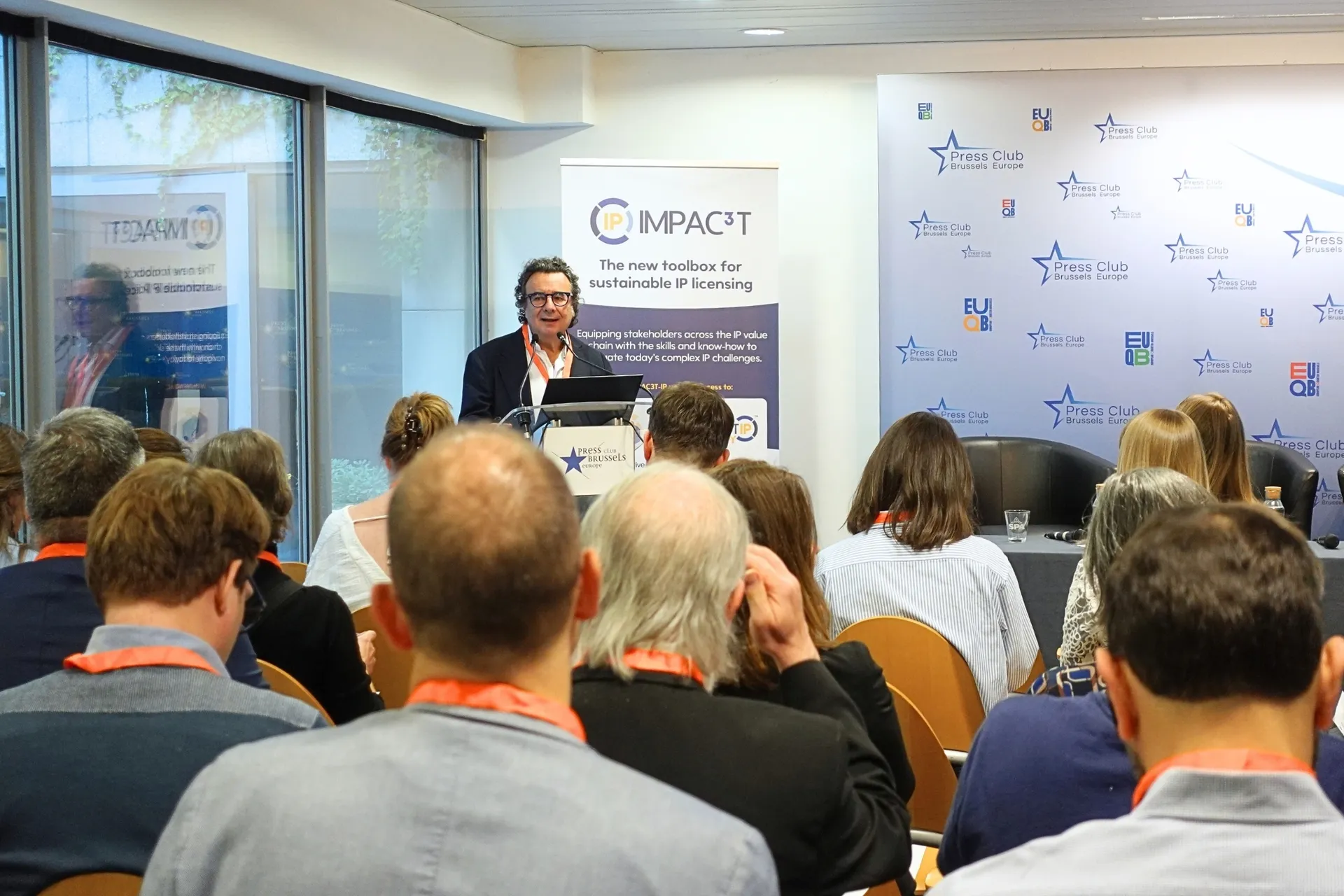
Turning knowledge valorisation into practice means rethinking how research impact is measured and supported. Based on the IMPAC3T-IP conference held in Brussels on 7 October 2026, these 5 lessons highlight the need for better impact metrics, a new approach to reach research communities, usable tools, EU policy support and stronger institutional commitment.
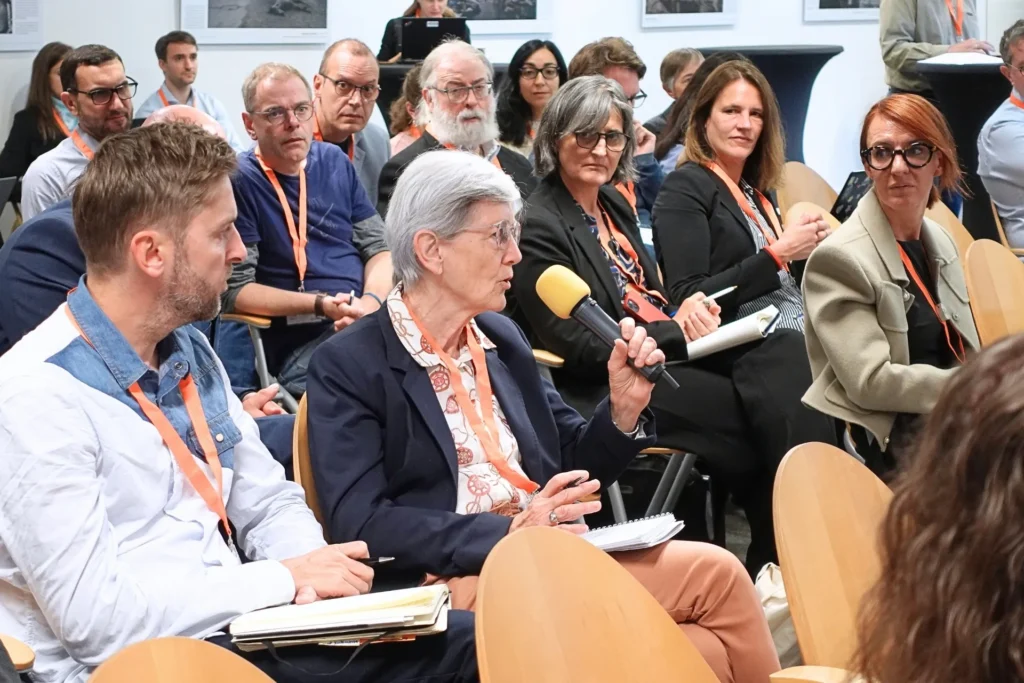
Across Europe, the understanding of how research creates value is changing. Yet in practice, how we support research impact, from assessment frameworks and licensing practices to professional skills and institutional priorities, has not kept pace.
This challenge was at the centre of the IMPAC3T-IP conference “Licensing for Use and Impact: Connecting Policy with Practice”, held in Brussels on 7 October 2026. Policymakers, researchers, knowledge transfer professionals and licensing experts discussed how licensing can help research and innovation deliver greater impact. Five lessons emerged on what it will take to turn knowledge valorisation into everyday practice.
1. Recognising research impact starts with measuring it
Researchers increasingly create impact through datasets, code, training materials or research that others reuse and build on. Yet there is no shared way to measure these contributions. Speakers called for new metrics to capture them. However, for Leona King, FWO Doctoral Researcher at the Centre for IT & IP Law of KU Leuven (CiTiP), that is only half of the answer: “We need more metrics to really measure impact, but more than that, we also need to make sure that these are recognised by the funding bodies and the academic institutions.”
Some funders are starting to move. In Spain, the national research agency now includes datasets and code in its evaluation criteria, as Gustavo Candela Romero, Assistant Professor at the University of Alicante, explained. But overall, recognition still lags.
2. Reaching new researchers requires new approaches.
Researchers in social sciences, humanities, and arts also create impact, but many transfer offices were built around patents. Alessandra Baccigotti, Knowledge Transfer and Innovation Expert at the University of Bologna, described her university’s experience: “Our office was once called ‘Knowledge Transfer Office’, not ‘Technology Transfer Office’, because 40% of our academics work in social sciences, humanities and the arts. However, for 18 years, we have only been dealing with technologies.”
In 2023, the university decided to change this. It sent young knowledge transfer staff to meet researchers across its departments, including in the social sciences and humanities. Many of them had never worked with the office before. At first, they were not interested: for them, research results should be free and open to everyone. Words like ‘commercialisation’ or ‘revenues’ put them off. So, the office changed the way it talked to them, focusing on how it could accelerate their own work.
3. Tools only create impact when people can use them
Europe has developed a growing number of frameworks, guidelines, and support tools for knowledge valorisation. Yet, speakers agreed that people don’t always use them. As Claire Fritz, Senior Innovation Manager and Senior Strategic Advisor at EURICE, put it: “Availability doesn’t really equal usability.”
The issue is that professionals often struggle to identify which resource fits their situation. For Claire Fritz, tools should start with the user’s problem and explain what result they lead to. The European IP Helpdesk, coordinated by EURICE, follows this logic by combining guidance with regular training. That is why experts say that peer learning and communities of practice matter as much as the tools themselves.
4. EU policy is moving from ambition to concrete support
For the European Commission, getting research results into use is a priority for Europe’s competitiveness. Anna Battiston, Policy Officer at DG Research and Innovation, acknowledged that transfer offices still face challenges in terms of skills and capacity, and that practices remain fragmented across institutions and countries.
To respond, the Commission is preparing guidance on IP licensing and spin-off creation to serve as a blueprint for academic institutions, along with support for capacity building in transfer offices. A European scheme for responsible licensing is also expected to be adopted in 2027. But policy can only set the framework. Making it work is up to universities and research organisations.
5. Institutional change is the real challenge
This is the point several speakers came back to: lasting progress depends on universities and research organisations treating knowledge valorisation as a strategic activity. For Andrea Di Anselmo, Co-founder of META group and coordinator of IMPAC3T-IP, it is the central challenge: “The problem is not the lack of money. The real problem is that knowledge valorisation is not a priority at an institutional level.”
The pieces are already there: good tools and professionals willing to learn, adapt and upskill. What is needed now is institutional backing, and professionals can help build it by acting as ambassadors for this change within their own institutions.
Be part of the conversation
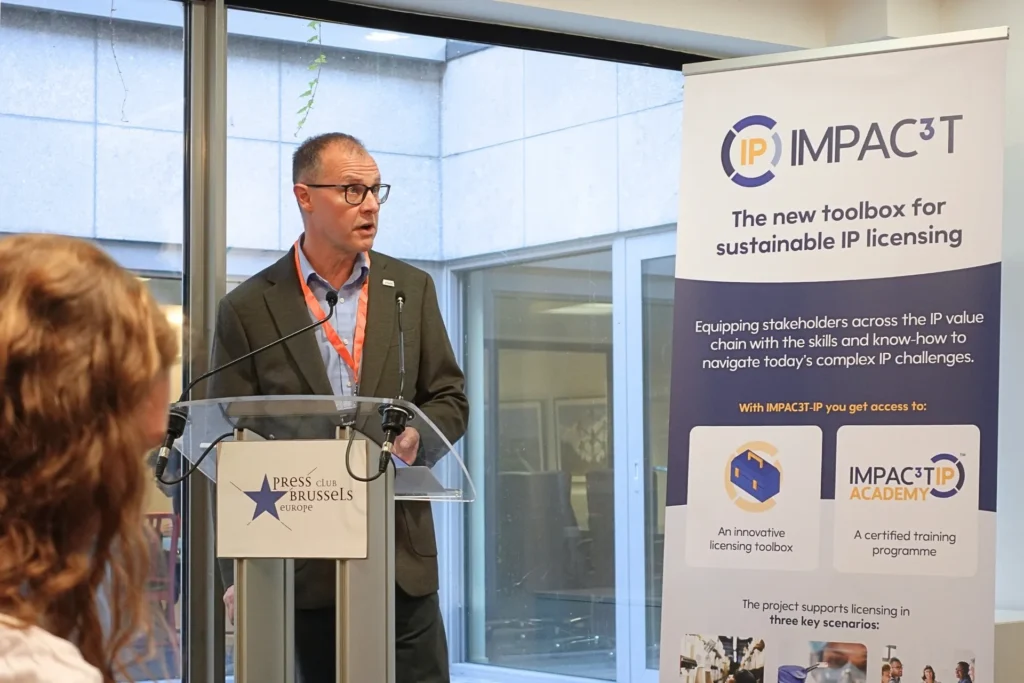
This kind of change doesn’t happen alone: it requires the involvement of all actors. It grows through peers who share what works, and through professionals who bring tools and new practices back to their institutions. Here is how you can take part in the movement:
- Missed a panel or want to hear it again? Rewatch the conference on YouTube here.
- Want to share your experiences and challenges with other professionals working on knowledge valorisation? Join our new Community of Practice, which brings together knowledge and technology transfer professionals, licensing experts, policymakers and many others. Stay informed about upcoming events and ongoing discussions. Register here.
- Want to bring the IMPAC3T-IP toolbox to your organisation and network? Become a certified trainer by applying for our next train-the-trainer sessions here.